
Siedlung Mausegatt
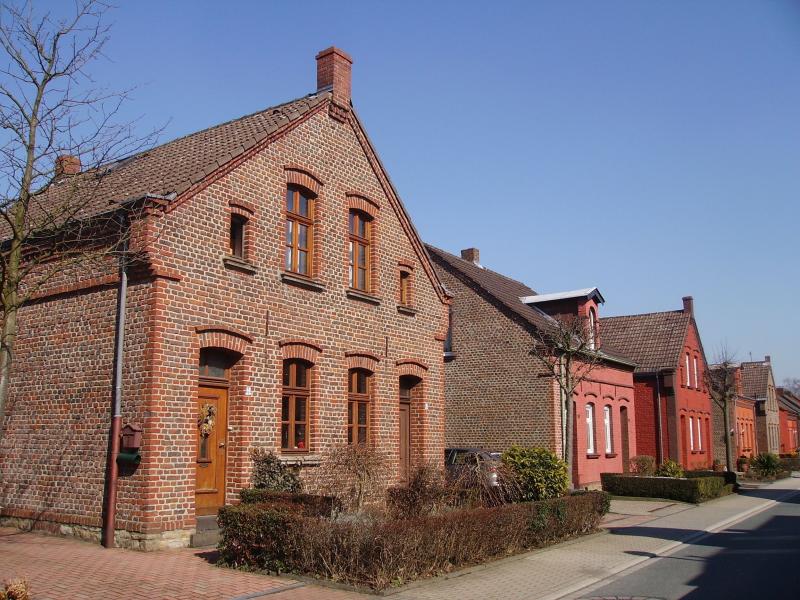
Die Siedlung Mausegatt-Kreftenscheer - ursprünglich Colonie Wiesche - wurde in der Zeit von 1899 bis 1911 von Hugo Stinnes und August Thyssen gebaut, um ihrer "Zeche Wiesche" eine feste Stammbelegschaft zu sichern.
Um einen Anreiz zum längeren Verbleib auf einer Arbeitsstelle zu schaffen - damals wechselten Arbeitnehmer bereits für einen geringen Lohnvorteil ihre Stelle und der Arbeitgeber musste dann neue Leute anlernen - und dem Betrieb damit zu einer kontinuierlich arbeitenden Belegschaft zu verhelfen, wurde diese Arbeitersiedlung gegründet. Der herrschenden Wohnungsnot konnte so ein Ende gesetzt und die - oft auch aus Polen - angeworbenen Arbeiter, die unter Tage benötigt wurden, konnten in gutem Wohnraum untergebracht und durch diesen Vorteil an die Zeche gebunden werden.
In den zwei mal 106 Haushälften wohnten zu Beginn des letzten Jahrhunderts etwa 1.000 Menschen. In den 60er Jahren wurden die Mülheimer Steinkohlezechen nach und nach geschlossen. Als letzte Zeche beendete 1966 die Zeche Rosenblumendelle ihren Betrieb. Die ehemaligen Kumpels suchten sich andere Arbeitsstellen, wohnten aber weiter zur Miete in den Zechenhäusern, die sie dann teilweise in Eigenarbeit selbst modernisierten.
1977 sollten die Häuser saniert und danach verkauft werden. Daraufhin schlossen sich die Siedlungsbewohner zu einer Bürgerinitiative zusammen. Diese schaffte es in zähen, eineinhalb Jahre dauernden Verhandlungen, dass die in den Häusern wohnenden Mieter das Recht erhielten, das Haus - so wie es war - direkt selbst zu kaufen oder darin lebenslang zur Miete wohnen zu können.
Aus der Bürgerinitiative entstand dann die Siedlergemeinschaft, die sich dem Deutschen Siedlerbund anschloss. Das äußere Erscheinungsbild der Häuser ist in der Denkmalbereichssatzung festgelegt, so dass wir die Siedlung heute fast wie vor hundert Jahren sehen können. Zudem ist sie eine der letzten typischen Arbeitersiedlungen auf Mülheimer Stadtgebiet.